

Everyone in security has answers. We have questions.
59 MDR vendors. 59 versions of the same answer. We’d rather start somewhere more useful: with a better question. In fact, we host regular Democasts so we can hear your questions.

A good security question is usually
one you’d rather not answer.
Avoiding the question doesn’t make it go away. It just means someone else gets to answer it for you.
HARD QUESTIONS
Nobody agrees on these. Good.
Whether you run a SOC or work the front line, some debates never quite settle. That’s fine. We just think the arguing is the point.

Is it people or AI?
One side says AI is the only way to handle volume. The other says a machine can’t be held accountable for a call that matters. Both are right about something.

Does more data make you safer?
More visibility means fewer blind spots, so collect everything. But it’s mostly noise, right? There’s a thin line between coverage and clutter.

Where does expertise come from?
Buy the platform, and the expertise is built in. Or does the software only scale where judgment already exists? After all, you can’t buy your way to good analysts. Or can you?

Is good security slow by design?
Harden the environment and people adjust. But make it painful enough and your own users adapt faster than attackers. The friction might be self-defeating.
WHY EXPEL?
We started with a question, too.
Expel exists because a few people wouldn’t stop asking why security had to work the way everyone accepted. That question is still the job.
STAY CURIOUS
Questions we’ve been thinking about
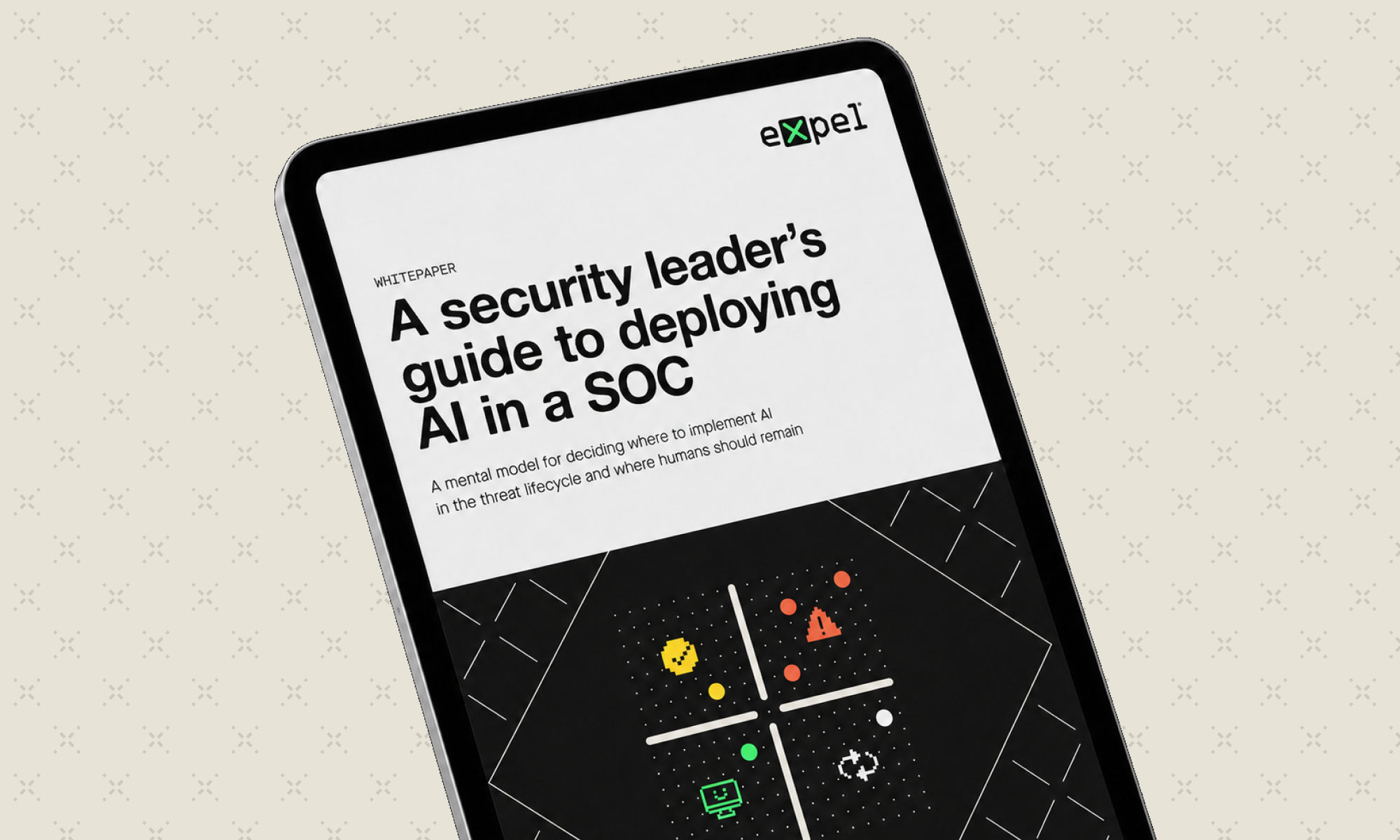
A security leader’s guide to deploying AI in a SOC
How to deploy AI in a SOC: Expel's Trust vs. Impact Framework shows which tasks to automate, which need human approval, and where analysts lead.
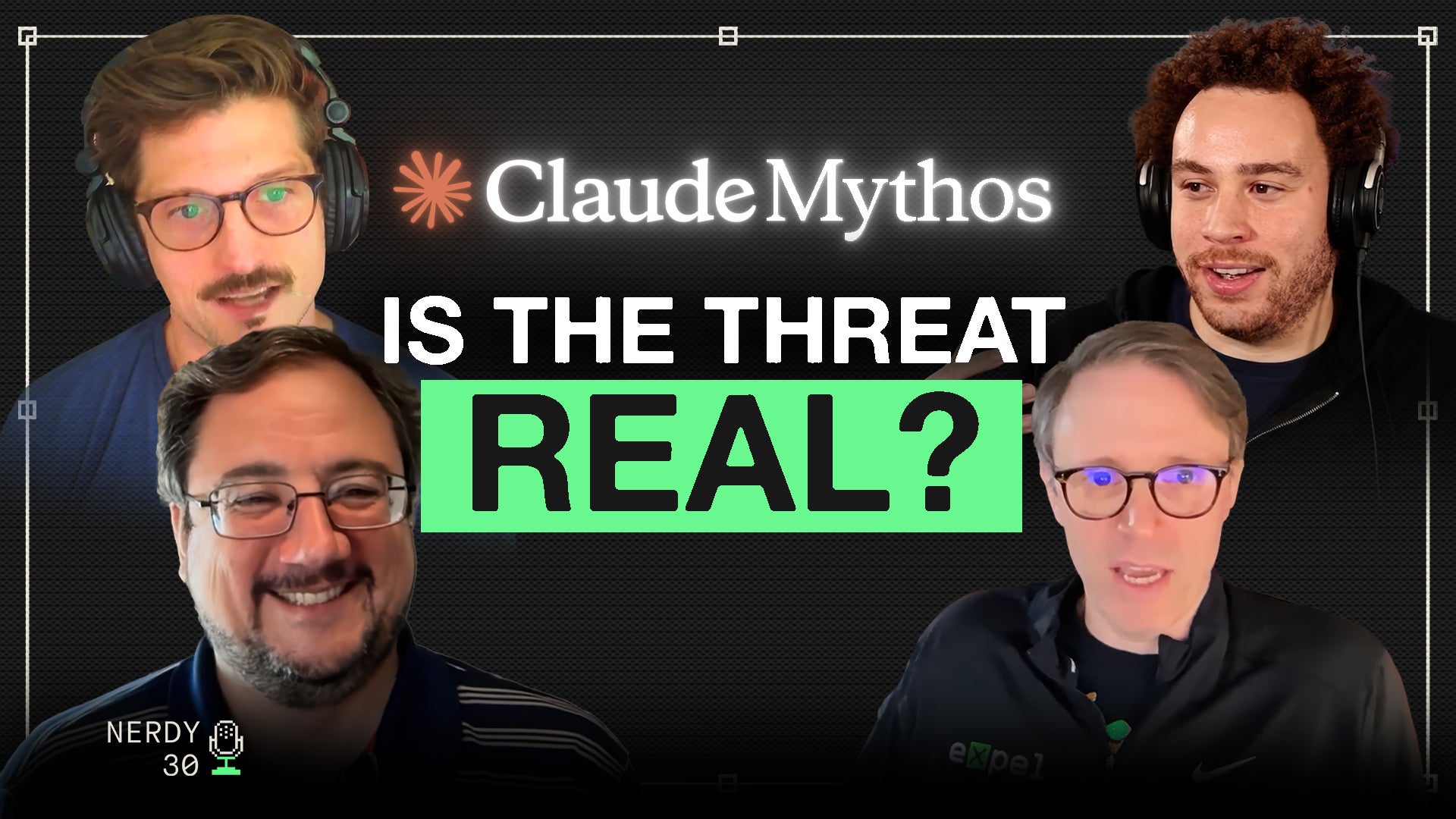
AI exploit development and Claude Mythos: Should defenders worry?
Is Claude Mythos really changing cybersecurity? Listen into this debate between Expel experts and Marcus Hutchins on AI threats and why defenders may still have the advantage.

Is it even possible to get security and finance on the same page?
300 security and finance leaders reveal where alignment breaks down, what actually fixes it, and where perceptions diverge.

So, what’s your question?
Every answer starts with a question someone’s willing to ask out loud. Yours is welcome here. Join us every other Friday as we unpack these questions live.
Frequently asked questions
Expel differs from other MDR providers on transparency, speed, and tool flexibility. Expel Workbench shows customers every detection, investigation, and action in real time. Expel reports a 13-minute mean time to respond on high and critical incidents and connects to 160+ coverage areas without rip-and-replace. See side-by-side comparisons at expel.com/compare.
Expel was named a Leader in The Forrester Wave: Managed Detection and Response Services, Q1 2025, with the highest possible score in 15 of 21 criteria. Expel also publishes operating metrics, including a 14-minute mean time to remediate on fully automated high and critical incidents.
Expel customers see the same view Expel analysts see. Expel Workbench displays every alert, investigation, AI-generated explanation, and response action in real time, along with mean time to detect, mean time to respond, and true positive rate. Monthly reports and regular service reviews turn those metrics into posture improvements you can share with leadership.
Expel connects to your existing security stack within minutes through API integrations, with no agents to deploy. Expel’s onboarding walkthrough shows customers getting up and running in seven minutes or less. Once connected, Ruxie begins enriching and triaging alerts, and Expel analysts provide 24×7 coverage across endpoint, identity, cloud, network, and SaaS.
When Expel confirms a real threat, Expel analysts contain it directly instead of sending a recommendation and waiting. Expel auto remediation executes containment actions agreed during onboarding, and analysts handle response steps that require judgment. Ruxie then produces a plain-language incident report, synced to Workbench and Slack or Microsoft Teams, for your team to review.
Expel pairs Ruxie, its AI SOC manager, with 24×7 human analysts instead of relying on static automation playbooks or autonomous AI alone. Ruxie enriches, correlates, and triages alerts across every connected tool, then escalates decisions that need judgment to Expel analysts. Ruxie is trained on more than a decade of Expel incident data, and every analyst decision improves it.
Expel’s agentic MDR is credible because its AI claims are tied to published operating metrics and a visible audit trail. Ruxie, Expel’s AI SOC manager, handles volume and high-confidence calls, while Expel analysts make consequential decisions and sign off on incident reports. Expel Workbench shows AI-driven explanations for every step bots and analysts take, so customers can verify the work.
Yes, for most mid-size teams Expel costs less than staffing 24×7 coverage internally, which typically requires eight to ten analysts. Expel connects to your existing tools, investigates 100% of alerts, and takes containment actions, so a small team can focus on strategic work instead of overnight triage.
Yes. Expel gives organizations without a SOC 24×7 detection and response from day one, using the security tools they already own. Expel also provides regular service reviews, resilience recommendations, and monthly reporting that shows posture improvement over time. Expel works best when at least one internal owner sets priorities and acts on Expel’s resilience recommendations.
Yes. Expel supports enterprises with existing SOCs by taking on 24×7 monitoring, tier-one and tier-two triage, and frontline containment, so internal analysts can focus on tier-three investigations, threat hunting, and architecture. Expel can work with your current SIEM or run it through Managed SIEM. Affirm’s security engineers manage 50% fewer investigations than they handled before Expel.