

Table of Contents
AI transforms SOC operations by automating repetitive tasks, filtering noise, and enabling security analysts to focus on genuine threats that require human expertise. Rather than replacing security professionals, artificial intelligence amplifies their capabilities—processing millions of events at machine speed while humans provide the strategic thinking, contextual awareness, and creative problem-solving that machines can’t replicate.
Modern security operations centers face an overwhelming challenge: too many alerts, not enough qualified analysts, and attackers who move faster than manual processes allow. Organizations receive over 11,000 security alerts monthly on average, creating unsustainable workloads that lead to analyst burnout and missed threats. AI and automation address these fundamental problems by handling the high-volume, repetitive work that exhausts security teams.
The most effective approach combines AI-powered automation with expert human oversight. Expel’s security operations platform demonstrates this partnership in action: AI bots like Josie and Ruxie triage millions of events and enrich alerts with context, while experienced analysts investigate complex threats and make strategic decisions. This human-AI collaboration achieves what neither can accomplish alone—rapid response times with sophisticated threat analysis.
AI in SOC operations
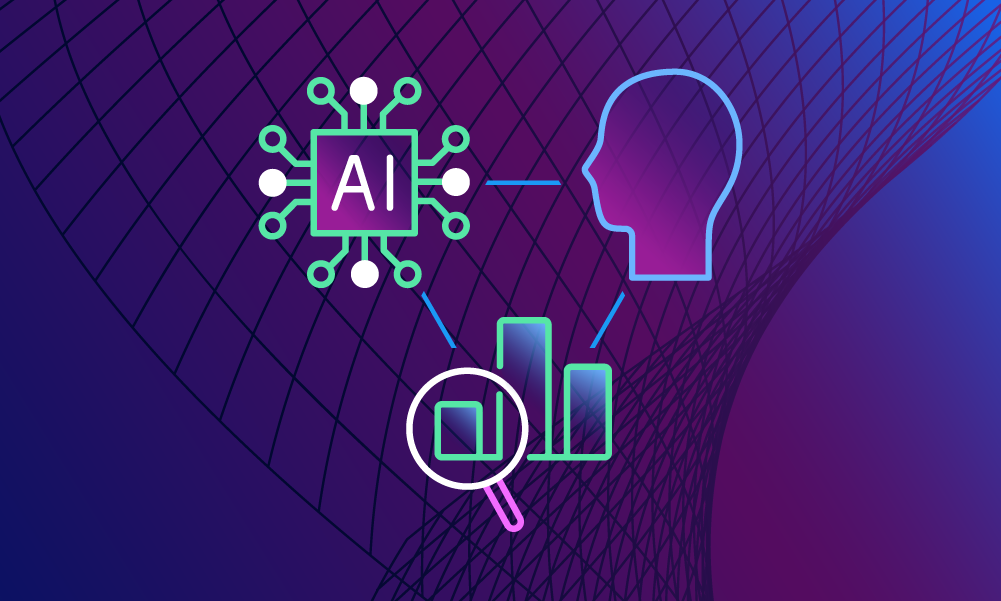
AI in SOC operations refers to the application of machine learning, pattern recognition, and intelligent automation to enhance threat detection, accelerate incident response, and reduce the operational burden on security teams. Rather than functioning as a replacement for human analysts, AI serves as a force multiplier that enables security professionals to work at scale and speed impossible through manual processes alone.
The foundation of AI-driven security operations rests on machine learning models that analyze vast amounts of security data to identify patterns humans can’t see. These systems process billions of events monthly, learning from historical incident data to improve detection accuracy over time. The key isn’t using AI to burn through haystacks of alerts but rather connecting dots across disparate security tools to find needles—the genuine threats that matter.
Machine learning detection enables security operations to move beyond signature-based approaches that only catch known threats. ML algorithms establish behavioral baselines for users, devices, and network activity, then flag anomalies that may indicate compromise. This capability proves particularly valuable for detecting insider threats, credential misuse, and lateral movement that don’t match traditional attack signatures.
Pattern recognition capabilities allow AI systems to correlate security events across multiple data sources, identifying attack campaigns that span endpoints, networks, identity systems, and cloud environments. A sophisticated attack might begin with a phishing email, progress through credential compromise, and culminate in data exfiltration—AI correlation ties these discrete events into coherent incident timelines that manual analysis would miss.
Anomaly detection represents another critical AI capability for security operations. By continuously learning normal behavior patterns, AI systems can identify deviations that signal potential threats. This proves especially valuable for detecting zero-day attacks and novel techniques that signature-based detection misses entirely. According to research on AI-driven SOC solutions, unsupervised anomaly detection using techniques like autoencoders and isolation forests can surface novel behaviors and lateral movement patterns that signature-based systems overlook.
The most effective AI implementations in security operations maintain transparency in how decisions are made. Expel’s machine learning approach for identity alerts provides not just a classification but the reasoning behind it, allowing analysts to understand and trust the AI’s judgment. This transparency proves crucial for building confidence in automated systems and enabling analysts to provide feedback that improves accuracy over time.
Natural language processing extends AI capabilities to threat intelligence analysis. NLP systems can extract indicators of compromise and tactics from thousands of security reports, automatically enriching detection logic with the latest threat intelligence. This automated intelligence integration ensures security operations stay current with evolving attack techniques without requiring analysts to manually review every threat report.
Security operations automation
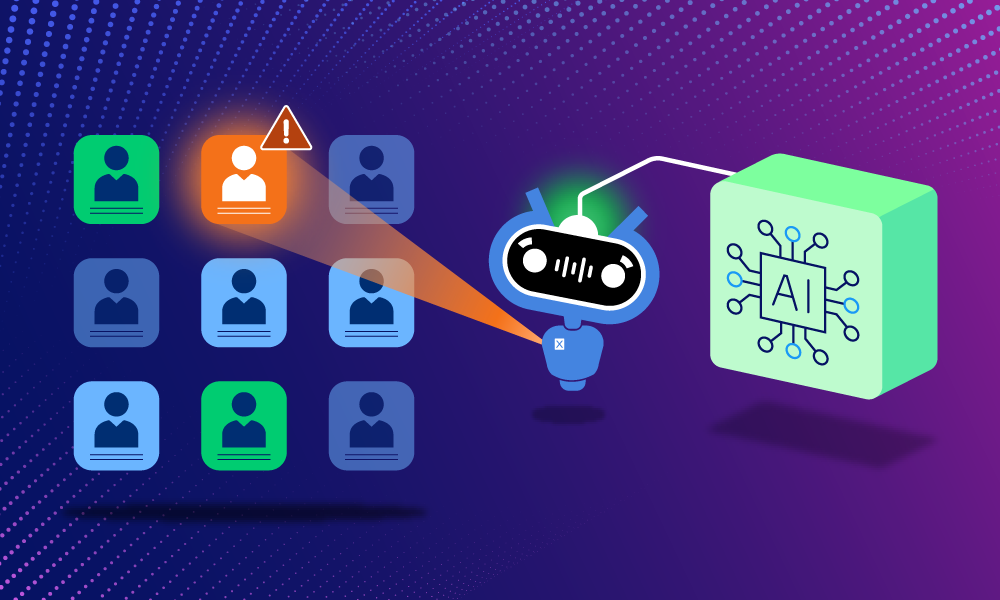
Security operations automation encompasses the systematic application of technology to execute repetitive security tasks without manual intervention. Unlike basic rule-based scripts, modern automation integrates intelligent decision-making, orchestrates actions across multiple security tools, and adapts based on contextual factors like asset criticality and threat severity.
The goal of automation isn’t eliminating human involvement but rather redirecting analyst expertise toward high-value activities. AI and automation filter noise and pre-enrich alerts so analysts can focus their expertise on real investigations rather than chasing false positives. This shift enables security teams to scale operations without proportionally increasing headcount.
Automated playbooks define standardized response procedures for common security scenarios. These playbooks incorporate decision trees, conditional logic, and sequential actions that mirror expert human response processes. When specific conditions are met—such as detecting ransomware encryption patterns—automated playbooks can immediately execute containment actions like host isolation while simultaneously notifying security analysts for investigation.
Intelligent triage represents one of the highest-value automation opportunities in security operations. Rather than forcing analysts to review every security event, intelligent triage systems automatically categorize alerts, prioritize based on risk and severity, and route to appropriate response workflows. This automation addresses the alert fatigue problem that plagues traditional security operations.
Orchestration automation coordinates actions across multiple security tools through API integrations. When a threat is identified, orchestration platforms can automatically gather additional context from endpoint protection, query threat intelligence feeds, check for related activity in SIEM logs, and initiate response actions—all within seconds. This cross-tool coordination proves impossible to achieve manually at the speed modern threats demand.
Context enrichment automation adds critical information to security events that helps analysts make faster, better decisions. This includes enriching alerts with asset criticality data, user role information, previous incident history, threat intelligence context, and business impact assessments. Without automation, gathering this context requires analysts to pivot through multiple systems, dramatically slowing investigation speed.
Automated enrichment proves particularly valuable for security teams with limited resources. Rather than requiring every analyst to have deep expertise across all security domains, automation can surface relevant context and recommendations that guide less experienced team members through complex investigations.
Automated response capabilities execute predefined containment actions when specific threat conditions are validated. This might include isolating compromised endpoints, disabling compromised user accounts, blocking malicious IP addresses at firewalls, or terminating malicious processes. The most effective automation implementations amplify rather than replace human expertise.
AI for threat detection
AI for threat detection applies machine learning algorithms and behavioral analytics to identify security threats that traditional signature-based approaches miss. Rather than relying exclusively on known attack patterns, AI-powered detection analyzes behavior, establishes baselines for normal activity, and flags deviations that may indicate compromise—even when using novel techniques that have never been seen before.
The challenge driving AI adoption in threat detection is straightforward: attackers constantly evolve tactics to evade signature-based defenses, and the sheer volume of security data overwhelms manual analysis capabilities. Organizations need detection capabilities that can process billions of events, identify subtle attack indicators across multiple data sources, and adapt to new threats without constant manual tuning.
Behavioral analytics forms the foundation of AI-powered threat detection. These systems establish normal behavior baselines for users, devices, applications, and network connections, then apply statistical models to identify anomalous activity. A user who typically accesses specific systems during business hours suddenly downloading sensitive data at 3am from an unusual location triggers behavioral alerts—even if no malware signatures are present.
Predictive analytics extends threat detection beyond reactive responses to anticipate potential attacks. By analyzing historical attack patterns, threat intelligence, and environmental vulnerabilities, predictive models can identify likely attack vectors before they’re exploited. This enables security teams to proactively strengthen defenses rather than solely responding to active incidents.
Cross-correlation capabilities represent a crucial advantage of AI-powered detection. Sophisticated attacks often involve multiple stages across different security domains—initial access through phishing, lateral movement via stolen credentials, and data exfiltration through cloud services. AI systems can correlate these discrete events into unified attack narratives that manual analysis would struggle to connect.
AI excels at processing massive datasets, detecting patterns, and responding to known threats at machine speed. However, it struggles with contextual decision-making and understanding the intent behind emerging attack techniques—highlighting why human expertise remains essential even in AI-powered security operations.
Real-time detection capabilities enable security operations to identify and respond to threats within minutes rather than hours or days.
Can AI replace SOC analysts?
No—AI cannot replace SOC analysts, and organizations pursuing that goal fundamentally misunderstand how effective security operations work. AI excels at processing massive data volumes, identifying patterns, and executing repetitive tasks at machine speed. However, security operations require capabilities that AI cannot provide: contextual decision-making, strategic thinking, understanding business impact, and creative problem-solving for novel threats.
Research on AI-driven security operations confirms this reality: “AI excels at processing massive datasets, detecting patterns, and responding to known threats at machine speed. However, it struggles with contextual decision-making, creative problem-solving, and understanding the intent behind emerging attack techniques. Human analysts bring strategic thinking, adaptability, and intuition that AI simply cannot replicate.”
The question isn’t whether AI will replace analysts but rather how AI can amplify analyst effectiveness.
How accurate is AI threat detection?
AI threat detection accuracy depends heavily on implementation quality, training data, and ongoing tuning—it’s not a binary “accurate” or “inaccurate” proposition. Well-implemented AI systems dramatically reduce false positives while catching threats that signature-based detection misses. However, poorly implemented AI can generate its own noise if not properly trained on representative data and continuously refined based on analyst feedback.
The key to AI detection accuracy is transparency and continuous improvement. Systems that provide not just classifications but explanations for their reasoning enable analysts to validate AI decisions and provide corrective feedback. This human-in-the-loop approach achieves better accuracy than either AI alone or manual analysis alone.
Machine learning SOC
Machine learning SOC refers to security operations centers that leverage ML algorithms throughout their detection, investigation, and response workflows. Rather than treating machine learning as a bolt-on feature, these organizations integrate ML capabilities into the operational foundation of how they identify threats, triage alerts, investigate incidents, and measure effectiveness.
The evolution toward ML-powered security operations stems from practical necessities. Traditional security operations struggle with alert volumes that exceed human capacity to review, attackers who constantly evolve techniques to evade signature-based detection, and the need to correlate events across dozens of disparate security tools. Machine learning addresses these challenges by automating pattern recognition at scale while continuously learning from new threat data.
Supervised learning models in security operations train on labeled datasets of known attacks and benign activity. These models learn to classify new events based on features that distinguish threats in training data. Supervised learning excels at detecting known attack patterns with high accuracy but requires substantial training data and regular updates to catch emerging threats.
Common supervised learning applications include malware classification, phishing detection, and identifying command-and-control traffic. According to research on AI SOC architectures, supervised detectors using gradient boosting, random forests, and convolutional neural networks can classify security events and raise high-quality alerts about specific threats while reducing low-value alert churn.
Unsupervised learning approaches don’t require labeled training data, instead identifying patterns and anomalies through statistical analysis of normal behavior. These models excel at detecting novel attacks, insider threats, and advanced persistent threats that supervised models might miss because they don’t match known attack signatures.
Unsupervised learning powers user and entity behavior analytics (UEBA), which establishes baseline behavior patterns then flags deviations. A user account that suddenly accesses systems it’s never touched before, or a server that begins making unusual network connections, triggers alerts even without matching known attack signatures.
Deep learning applications in security operations include analyzing network traffic patterns, processing log data at scale, and identifying malicious files through content analysis. These neural network approaches can process unstructured data like raw network packets or executable file contents, extracting threat indicators that simpler ML models would miss.
Continuous learning distinguishes effective machine learning SOCs from those that treat ML as a static capability. The threat landscape evolves constantly—new attack techniques emerge, legitimate business activities change, and organizational technology stacks expand. ML models must continuously incorporate new data, analyst feedback, and threat intelligence to maintain effectiveness.
The feedback loop between human analysts and ML systems proves essential for sustained accuracy. When analysts investigate alerts classified by ML models, their findings—whether confirming threats or identifying false positives—feed back into model training. This ongoing refinement improves both precision (reducing false positives) and recall (catching more genuine threats).
What SOC tasks should be automated?
Security operations should automate high-volume, repetitive tasks that follow predictable logic while keeping humans in control of nuanced decisions requiring contextual judgment. The goal is freeing analyst expertise for complex problem-solving rather than drowning in routine alert triage.
High-value automation targets include:
Alert triage and prioritization: Automatically categorizing security events by threat type, severity, and confidence level. According to MDR best practices, modern providers leverage intelligent alert prioritization and automated threat hunting to accelerate response times while reducing analyst workload.
Context enrichment: Automatically gathering relevant information about affected assets, users, threat indicators, and business impact.
Data collection and normalization: Aggregating security events from disparate sources into consistent formats for analysis. This foundational automation enables correlation and analysis that would be impossible across tools using different log formats and terminology.
Basic containment actions: Executing predefined response actions for validated threats, such as isolating compromised endpoints or disabling compromised accounts.
Threat intelligence correlation: Automatically checking indicators against threat intelligence feeds, previous incidents, and known attack campaigns. This automation provides instant context that would require extensive manual research otherwise.
Tasks that should remain primarily manual include:
Strategic decision-making about security architecture, technology selection, and risk prioritization. These decisions require business context and long-term thinking that automation cannot provide.
Complex threat investigation involving novel attack techniques, sophisticated adversaries, or incidents with significant business impact. Human analysts bring creative problem-solving and contextual awareness essential for these investigations.
Communication with stakeholders about security incidents, risk assessments, and remediation recommendations. While automation can generate reports, humans must translate technical findings into business-relevant guidance.
What’s the ROI of SOC automation?
SOC automation ROI manifests through multiple dimensions beyond simple cost reduction: faster threat response, reduced business impact from incidents, improved analyst retention, and the ability to scale security operations without proportional headcount increases. Direct cost savings emerge from reducing the manual work required for security operations.
The speed benefits of automation translate directly to reduced business impact from security incidents. IBM research on data breaches found the average time to identify and contain breaches is 277 days, with average costs reaching $4.45 million per incident. Automation that reduces containment time from hours to minutes dramatically limits attacker dwell time and potential damage.
Analyst retention represents another significant ROI factor. Security professionals leave positions due to overwhelming workload and alert fatigue—not because they dislike security work but because they spend most of their time on tedious triage rather than interesting investigations. Automation that eliminates this drudgery improves job satisfaction and reduces costly turnover.
Automated security operations
Automated security operations represent the integration of AI, machine learning, and intelligent orchestration into comprehensive security workflows that span detection, investigation, response, and continuous improvement. Rather than automating individual tasks in isolation, this approach creates end-to-end automated processes that handle routine security operations with minimal manual intervention.
The distinction between automation and auto automation matters for understanding modern capabilities. Basic automation follows rigid, predefined rules—if X happens, do Y. Automated security operations incorporate contextual decision-making, adaptive responses based on environmental factors, and continuous learning that improves over time.
Augmented intelligence describes the relationship between automated systems and human analysts in modern security operations. Rather than artificial intelligence replacing human intelligence, augmented intelligence amplifies what humans can accomplish by handling computational tasks at machine speed while preserving human judgment for complex decisions.
Human-AI collaboration represents the operational reality of effective automated security operations. The collaboration typically follows this pattern: AI systems process vast amounts of security data, apply detection logic, triage alerts, and enrich events with context. Human analysts review AI-prioritized findings, investigate complex threats, make remediation decisions, and provide feedback that improves AI accuracy.
This division of labor recognizes the complementary strengths of humans and machines. AI excels at pattern recognition at scale, consistent execution of defined processes, and processing speed. Humans excel at contextual reasoning, creative problem-solving, understanding business impact, and adapting to novel situations. Research on AI-driven SOC solutions confirms that even the most sophisticated AI systems require human expertise for strategic decision-making and complex threat analysis.
Orchestration automation coordinates actions across multiple security tools and workflows to achieve objectives that individual tools cannot accomplish independently. When a threat is detected, orchestration might automatically gather additional context from multiple sources, assess risk based on asset criticality and threat intelligence, execute appropriate containment actions, and document the incident for compliance—all within seconds and without manual intervention between steps.
Automated enrichment adds critical context to security events that enables faster, more accurate decision-making. This includes correlating alerts with threat intelligence, adding asset criticality information, providing user context, displaying previous incidents involving the same entities, and surfacing relevant playbooks or response procedures.
Without automation, gathering this context requires analysts to query multiple systems, correlate information manually, and piece together relevant context—a process that can consume significant time per alert. Automated enrichment provides this context instantly, enabling analysts to immediately understand alert significance and appropriate response actions.
How do humans and AI work together in SOC?
Humans and AI work together in security operations through clearly defined roles that leverage each party’s strengths. AI handles high-volume tasks requiring speed and consistency—processing millions of events, applying detection logic, filtering false positives, enriching alerts with context, and executing predefined response actions. Humans handle tasks requiring judgment and creativity—investigating complex threats, understanding business context, making strategic decisions, communicating with stakeholders, and providing feedback that improves AI accuracy.
The most effective implementations maintain what we call expert-guided automation: automating the execution of remediation actions while keeping human analysts in control of the decision to remediate. This approach recognizes that while machines excel at executing tasks quickly and consistently, humans bring irreplaceable expertise in threat assessment and response strategy.
The collaboration typically follows this workflow: AI systems continuously process security data, applying detection rules and ML models. When potential threats are identified, AI automatically enriches the finding with context and routes it to the appropriate analyst queue based on threat type and severity. Human analysts review AI-prioritized findings, leveraging the enriched context to quickly understand alert significance. For validated threats, analysts either execute response actions directly or approve automated remediation workflows. Analyst actions and decisions feed back into the AI system, improving detection accuracy and automation effectiveness over time.
This feedback loop proves essential for sustained effectiveness. Our ML implementation, for example, compares ML classifications against expert analyst findings in an ongoing refinement process that has been instrumental in improving AI accuracy and alignment with the complex realities analysts face daily.
AI-powered SOC
An AI-powered SOC represents the operational evolution of security operations centers that integrate artificial intelligence and machine learning throughout their technology stack, processes, and analyst workflows. Rather than treating AI as a single feature or capability, AI-powered SOCs embed intelligence into every stage of the security operations lifecycle—from data collection and normalization through detection, investigation, response, and continuous improvement.
The defining characteristic of AI-powered SOCs isn’t the elimination of human analysts but rather the transformation of how those analysts work. Analysts transition from routine alert triage to high-value activities including threat hunting, vulnerability research, and security architecture improvement. They provide contextual business knowledge that AI systems cannot replicate independently.
Intelligent data foundation forms the base layer of AI-powered SOC architecture. This involves collecting security data from all relevant sources, normalizing disparate formats into consistent schemas, enriching events with contextual information, and organizing data to support efficient ML analysis. AI-powered systems build intelligent data foundations that continually collect deep telemetry, automatically prepare and enrich data, and uniquely stitch it into security intelligence tuned to support both specific sources and kill chain-wide behavioral detection.
Automated detection and correlation leverages ML models to identify threats across the full attack lifecycle. This includes detecting initial access attempts, lateral movement, privilege escalation, data access, and exfiltration activities—then correlating these discrete events into unified incident timelines that reveal attacker objectives and progression.
The correlation capability proves particularly valuable for detecting sophisticated attacks that deliberately avoid triggering any single high-confidence alert. By identifying patterns across multiple low-to-medium confidence signals, AI-powered SOCs can surface threats that would slip through purely manual analysis or simple rule-based correlation.
Adaptive learning enables AI-powered SOCs to improve continuously as they process more data and receive more analyst feedback. This learning occurs at multiple levels: detection models refine based on which alerts proved to be genuine threats versus false positives, automation workflows optimize based on which approaches proved most effective, threat intelligence integration improves as new attack patterns are identified, and response procedures evolve based on incident investigation findings.
Transparency and explainability distinguish effective AI-powered SOCs from “black box” systems that provide classifications without reasoning. Security operations require understanding why the AI reached particular conclusions—both for analyst validation and for continuous improvement through feedback.
Transparent AI systems provide not just threat classifications but the reasoning behind those classifications, the data points that influenced decisions, confidence levels for predictions, and clear explanations analysts can review and validate. This transparency enables productive human-AI collaboration rather than analysts either blindly trusting or reflexively distrusting automated findings.
Continuous measurement and optimization characterize mature AI-powered SOCs. These organizations systematically track detection accuracy, false positive rates, mean time to detect and respond, analyst productivity, and automation coverage—then use these metrics to identify improvement opportunities and validate that changes actually improve outcomes.
The future of AI-powered SOCs points toward increasing autonomy for routine operations while preserving human expertise for strategic decisions and complex investigations. As research on agentic AI in security operations indicates, capabilities expected by 2030 will dramatically exceed today’s implementations, enabling security teams to shift from operational burden to strategic focus.