
AI-POWERED CYBERSECURITY
Stop guessing where AI belongs in your SOC
The pressure to "just use AI" is real. So is the risk of using it wrong. This framework helps you do both: move fast and get it right.
Take this interactive AI assessment
Read our ungated whitepaper to learn more about our AI framework.
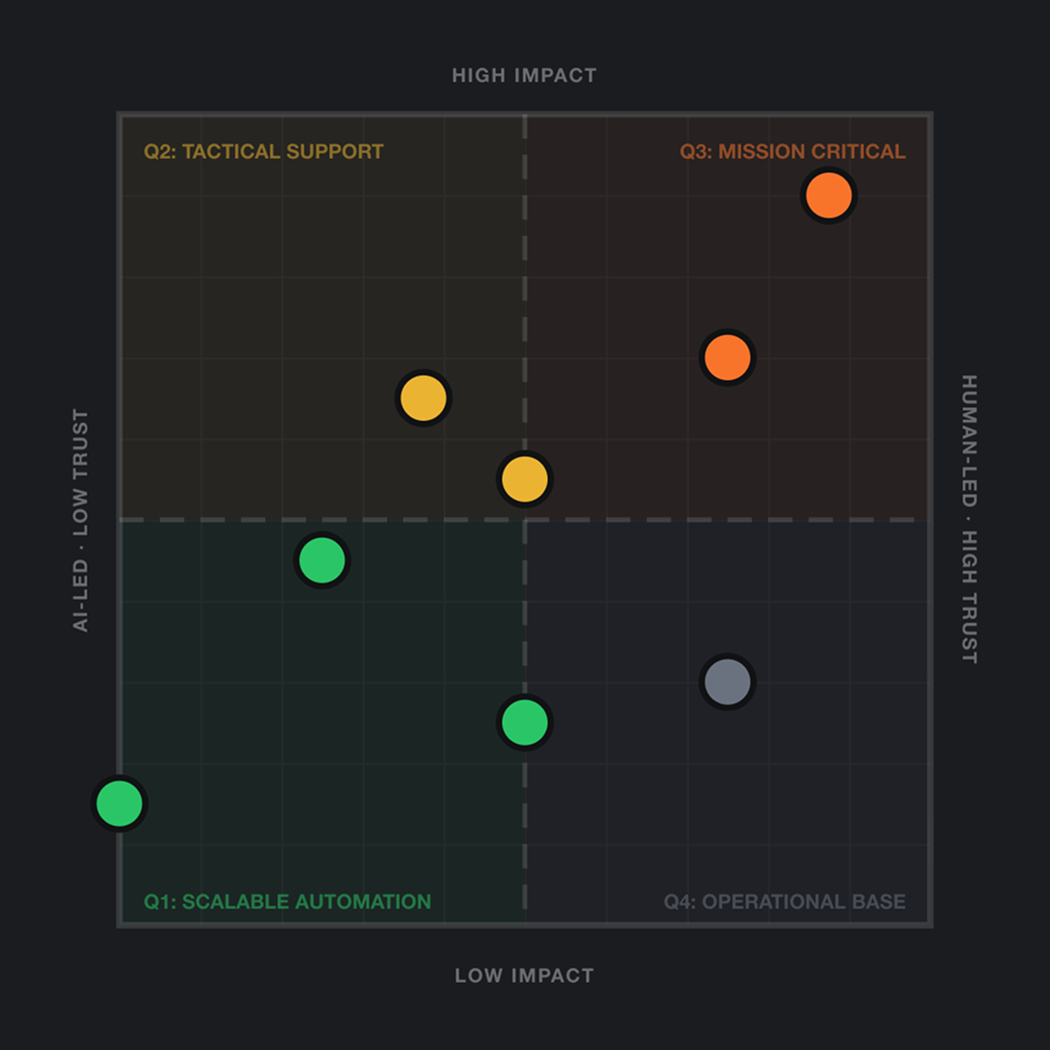
Most organizations are deploying AI reactively—chasing the directive, not a strategy. The Trust vs. Impact Framework is built from a decade of Ruxie, Expel’s AI, running in production in our SOC.
The result is a clear map of where AI can act autonomously, where it should support human judgment, and where tasks should be human-led, no exceptions.
Use cases fall into one of four quadrants:
- Scalable automation—low impact, low trust. Repetitive, high-volume tasks AI can own.
- Tactical support—high impact, low trust. AI proposes, the analyst decides.
- Mission critical—high impact, high trust. The analyst makes the call, every time. AI accelerates the work. It doesn’t replace the human doing it.
- Deprioritize or re-engineer—low impact, high trust. Fix the process before you add AI.
Map your use cases once, share with your team, and start deploying AI with intention.